

Warning: Yellow Flame on Natural Gas Stove Is Hazardous!
Under normal conditions, the flame of a gas stove is generally clear light blue.
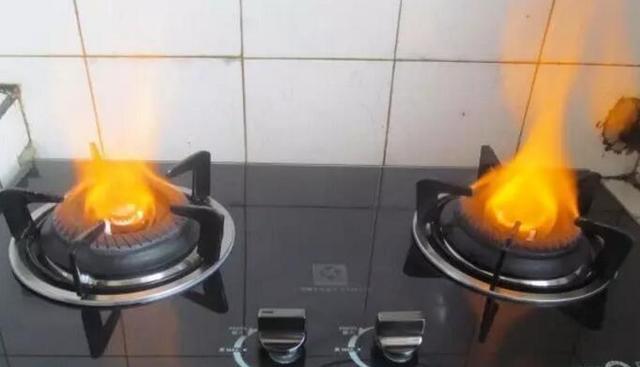
If the flame turns yellow or other colors, you need to stay alert. It is very likely that your gas stove has the following faults:
Poor damper adjustment: When gas mixes well with air during combustion, the flame will be blue with little smoke and strong firepower. If gas cannot fully mix with oxygen in the air, incomplete combustion occurs, the heat input will be low, the flame turns yellow and produces heavy smoke. Lift up the gas stove and you will see a small lever below to control the inner and outer dampers. Slide the lever left or right to enlarge the air inlet area and adjust until you get a blue flame.
Blocked damper passage: Dirt such as carbon deposits, rust and cobwebs inside the injector tube will impair the ejection capacity and cause yellow flames. In this case, thoroughly clean the dirt inside the injector to eliminate yellow flames.
Excessively large nozzle bore: The nozzle bore size varies for different gas sources. An oversize nozzle allows gas flow exceeding the rated volume and creates yellow flames; heavy oxygen shortage will further produce black smoke. For this issue, simply replace the nozzle matched for your gas source.
Proper use of gas is critical to life safety. Daily precautions are as follows:
- 1.The rubber hose under the gas stove is recommended to be replaced every two to three years to prevent gas leakage and safety accidents caused by hose aging or loose connections.
- 2.Do not leave unattended while the gas appliance is in use. Sudden pressure drop may cause flameout and natural gas leakage. If the flame extinguishes automatically, immediately close the main valve and the appliance valve, and open windows for ventilation. Do not turn on or off the range hood or other electrical appliances right away. Reignite only after the odor disappears.
- 3.Never place flammable items beside the stove. Keep the bottom of cookware dry to prevent water droplets from entering the stove orifices and causing rust and blockage.
- 4.Keep the igniter and stove surface clean. Once the microswitch is triggered, a series of electric sparks will be generated to ignite fuel. Check whether the pulse battery is damaged by high temperature or covered by dirt, which stops electricity transmission to the burner port. It is recommended to clean the stove surface promptly after cooking to remove splashed oil stains and contaminants.
▲










