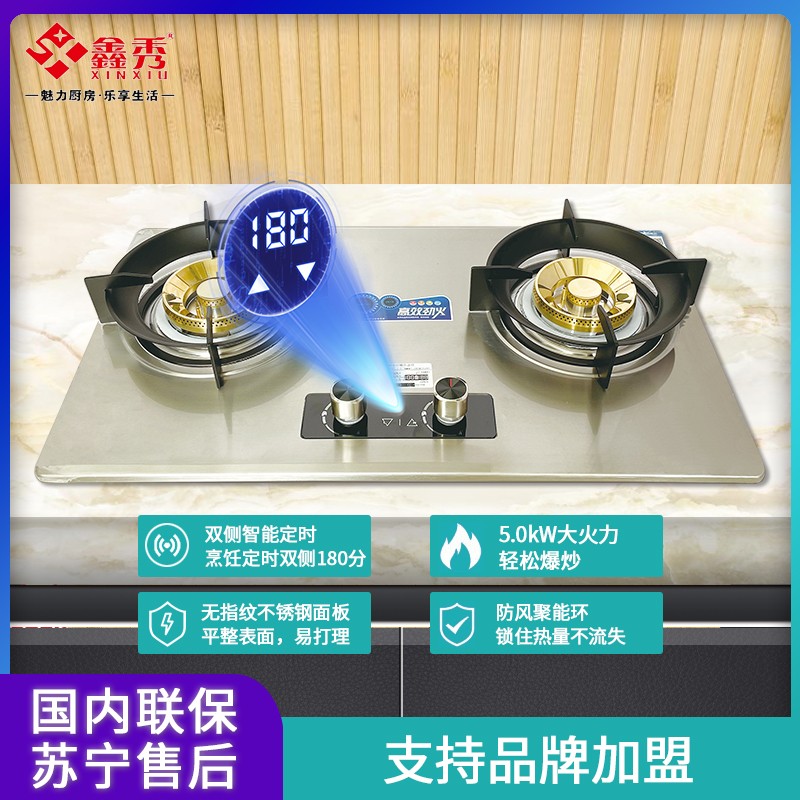
Most people are familiar with gas stoves, as they can be found in nearly every household kitchen. But do you know how gas stoves are specifically classified? Today we will walk you through the relevant knowledge for your reference.
- 1.Classified by gas source: natural‑gas stoves, liquefied‑petroleum‑gas (LPG) stoves, manufactured‑gas stoves, etc.
These three types cannot be used interchangeably due to different gas sources. If you need to switch gas sources, you must ask professional technicians to modify the stove. Some dual‑gas compatible stoves available on the market work with both natural gas and LPG. They support direct gas‑source switching without stove modification. - 2.Classified by cooktop panel material: stainless‑steel panel, tempered‑glass panel and ceramic panel.
Stainless‑steel panels are the mainstream choice on the market and match well with other kitchen appliances. However, they are prone to scratches. Do not clean them with steel wool, and avoid scraping the surface with sharp objects during use.
Tempered‑glass panels feature a modern, stylish look. Though they get dirty easily, they are simple to clean. Nevertheless, tempered‑glass panels carry a 3‑per‑thousand risk of cracking under sharp‑object impact or drastic temperature changes. Such scenarios should be avoided in daily operation.
Ceramic‑panel stoves are rarely seen on the market and seldom used in households, so we will not elaborate further.
- 3.Classified by burner quantity: single‑burner stoves, double‑burner stoves, triple‑burner stoves and multi‑burner stoves.
Your personal preference largely determines which model to install. Double‑burner stoves are widely adopted in ordinary Chinese households. Single‑burner stoves are cost‑effective and preferred by renters and RV users. Triple‑burner and multi‑burner stoves are more common overseas or in villas. Ultimately, your personal preference matters most regardless of the stove type.