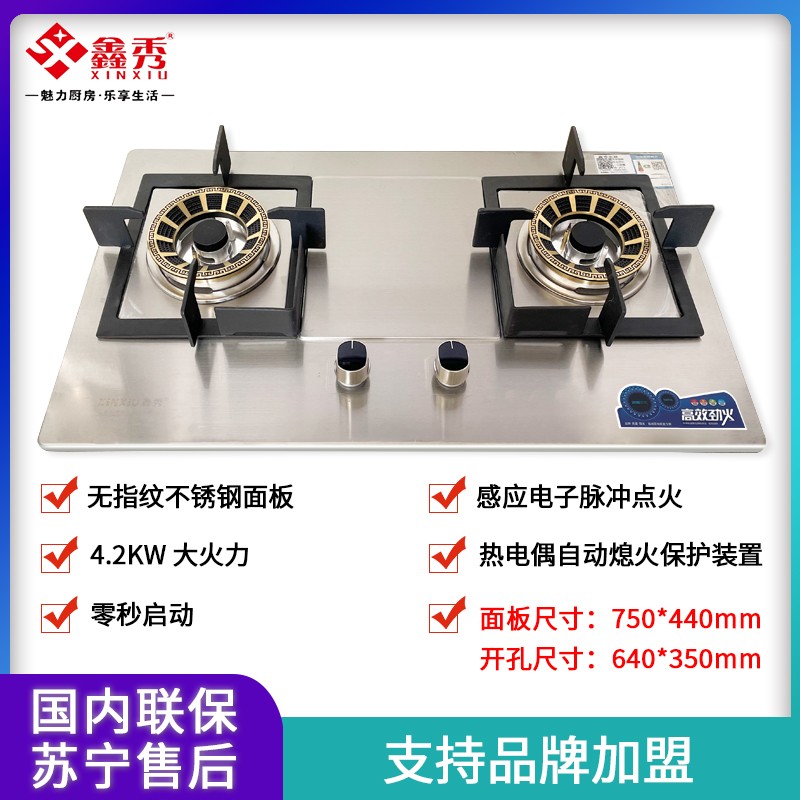
In the previous chapter, we classified gas stoves available on the market from three perspectives: gas source, cooktop panel material and burner quantity. In fact, there are another three classification criteria. Today we will continue to introduce other classifications of gas stoves.
- 1.Classified according to different air‑intake positions during combustion: upper‑air‑intake, lower‑air‑intake and full‑air‑intake gas stoves.
What are the installation differences among these three air‑intake modes?
For lower‑air‑intake stoves, air flows through air holes at the bottom of the stove. If the stove is installed as a built‑in model, holes must be opened on the cabinet to ensure smooth air circulation inside. When running at high‑fire output, partial incomplete combustion may occur, which could lead to excessive carbon monoxide (CO) emission.
The full‑air‑intake design is adopted by most current stoves. Air is supplied in two‑stage intake. When gas flows through the valve body into the burner, it mixes with primary air fully inside the burner. After jetting out from the burner cap, the gas mixes with secondary air for combustion. This mode can maximize fire‑power demand for household use while realizing sufficient combustion.
- 2.Classified by installation mode: built‑in type and freestanding type.
This classification is easy to understand. Most gas stoves on the market support both built‑in and freestanding installation, enabling users to install them flexibly according to actual kitchen conditions. - 3.Classified by combustion mode: atmospheric‑burning gas stoves and fully premixed‑combustion gas stoves.
Together with the three categories mentioned in the previous chapter, there are six classification methods for gas stoves in total. You may select a suitable gas stove targeting your real‑world requirements. Feel free to visit our product section. Please contact us for any inquiries.