
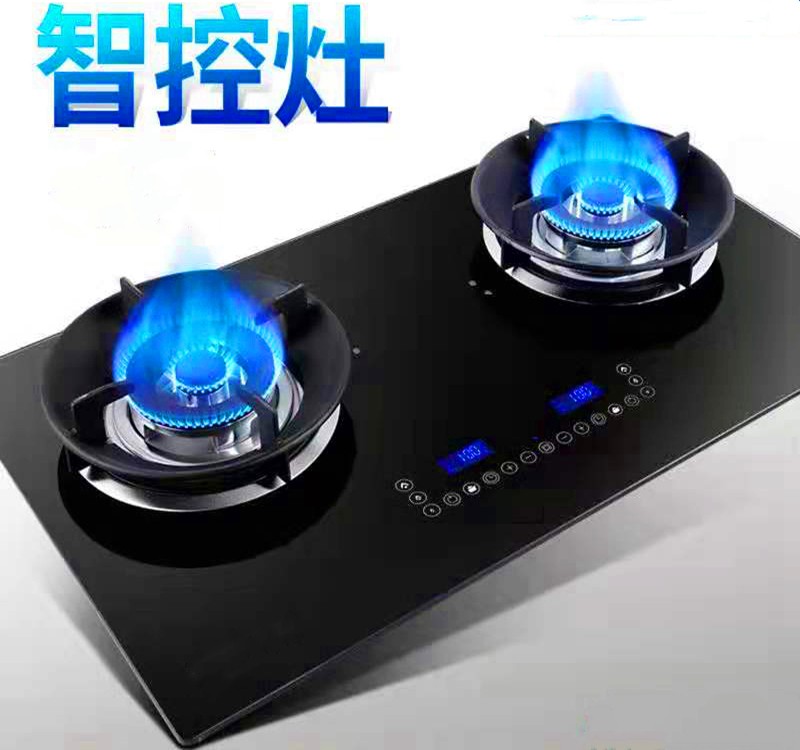
We are generally unfamiliar with home appliances, so we are heavily influenced by sales promoters when shopping. Promoters from every brand praise their own products, making it difficult for consumers to tell which one is truly better. Now let us show you how to select a gas stove!
- 1.Desktop or Built-in Gas Stove?
At present, gas stoves are mainly divided into two types: desktop and built-in. Desktop stoves are generally less attractive than built-in models. However, due to air intake design, desktop stoves usually achieve slightly higher thermal efficiency. Nevertheless, as people raise their requirements for kitchen aesthetics, and built-in stoves can also be placed on countertops for desktop use, the more visually appealing built-in gas stoves have gradually become the market mainstream, while desktop stoves account for a shrinking market share.
When installing a built-in stove, its bottom casing must not be fully sealed off from outside air. An approximately 80 cm² vent must be cut on the cabinet. Otherwise, gas may accumulate inside the sealed cabinet and reach a dangerous concentration, triggering accidents.
- 2.Confirm the Gas Source
Next, confirm the gas source for the stove. Choose a gas stove for natural gas (piped gas, T), liquefied petroleum gas (cylinder gas, Y), or manufactured gas (piped gas, R). Different gases vary in pressure, calorific value and price. One gas stove usually cannot be arbitrarily adapted for different gas sources. You should select the stove according to your local gas supply conditions or actual needs.
Calorific value ranking: Liquefied petroleum gas > Natural gas > Manufactured gas.
- 3.Panel Material: Stainless Steel, Ceramic or Tempered Glass?
Gas stove panels mainly come in three materials: stainless steel, ceramic and tempered glass. Stainless steel and tempered glass are the most common options.
- Aesthetics: Tempered glass > Ceramic > Stainless Steel
- Durability: Stainless Steel > Tempered Glass = Ceramic
- Ease of cleaning: Tempered glass > Ceramic > Stainless Steel
Modern tempered glass panels for gas stoves have mature technology and reliable resistance to thermal shock and impact. Cracking incidents are extremely rare. Even if cracking occurs, fragments stay bonded together to reduce injury risks. Most brands promise free replacement if the tempered glass panel cracks within the warranty period. Ceramic panels have slightly weaker impact resistance than tempered glass, yet feature better temperature resistance.
- 4.Air Intake Type
Gas combustion requires oxygen from the air; air intake essentially supplies oxygen. Gas stoves adopt two main air intake modes: upper air intake and lower air intake. Some manufacturers also refer to lower air intake as full air intake.










