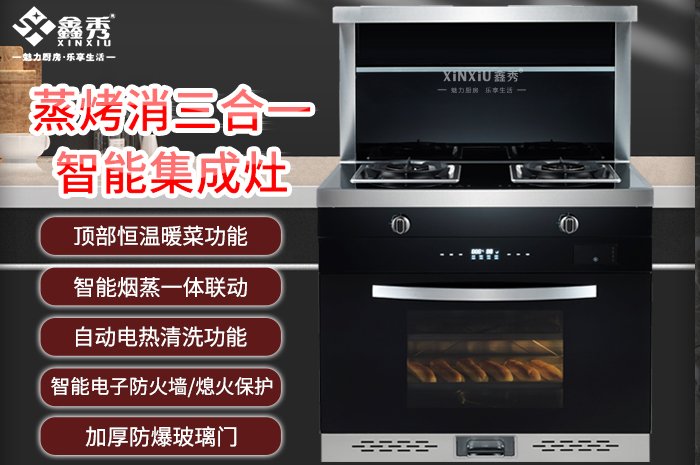
Common Faults and Repair Methods for Integrated Stoves
I. Display Screen of Integrated Stove Does Not Light Up
- The power cord is disconnected or the residual‑current protective plug is damaged. Repair or replace it after inspection and diagnosis referring to the wiring diagram.
- The power board or main control board is damaged. Repair or replace it after inspection and diagnosis.
II. Fan of Integrated Stove Fails to Rotate
- The power cord is disconnected or the residual‑current protective plug is damaged. Repair or replace it after inspection and diagnosis referring to the wiring diagram.
- The power board or main control board is damaged. Repair or replace it after inspection and diagnosis.
- The motor temperature rise exceeds 125 °C. Normal operation may resume after cooling down. If the motor is burnt out, replacement is required.
- Poor contact of control‑wire connectors. Inspect the connectors referring to the circuit diagram and ensure reliable contact.
- The capacitor is damaged; replace the capacitor.
III. Difficult Ignition of Integrated Stove
- The ignition knob is not turned by 90°, resulting in a small gas outlet and insufficient gas supply for normal combustion. Turn the ignition knob to the correct position.
- Weak ignition spark; replace the batteries.
- Blocked gas circuit. Check whether the gas passage between the main gas pipe and branch gas pipes is unobstructed and verify if the nozzle is clogged.
- The ignition slot of the burner cap is misaligned with the ignition needle. Rotate the aluminium cap for proper alignment.
- The ignition slot of the burner cap is clogged; clear debris from the ignition slot.
- Excessive air trapped inside the gas hose. Extend ignition duration until all air inside the hose is purged.
- Oxidized ignition electrode; wipe it clean with a dry cloth.
- Bent or crushed metal flexible hose. Straighten the hose and check for gas leakage.
IV. Frequent Automatic Flame‑out After Ignition
- No flame acts on the thermocouple (ion detection probe); readjust its position.
- Abnormal flame at the thermocouple position; adjust the air damper of the inner burner ring.
- Damaged pulse igniter or solenoid valve; inspect and replace the faulty component.
V. Abnormal Burner Flame
- Blocked gas circuit. Check whether the gas passage between the main gas pipe and branch gas pipes is unobstructed and verify if the nozzle is clogged.
- Poor‑quality gas or residual gas from LPG cylinders; replace the gas supply.
- Damp burner assembly; allow it to air‑dry naturally for normal operation.
- Clogged burner ports; clear obstructions from the burner ports.
- Burner cap and aluminium cap are not seated properly. Fit the burner cap onto the positioning pins.
- Improperly adjusted air damper; adjust the air damper to achieve optimal flame condition.
VI. Unusual Burning Noise
- Poor‑quality gas or residual gas from LPG cylinders; replace the gas supply.
- Clogged burner ports; clear obstructions from the burner ports.
- Burner cap and aluminium cap are not seated properly. Fit the burner cap onto the positioning pins.
- Improperly adjusted air damper; adjust the air damper to achieve optimal flame condition.
VII. Disinfection Cabinet Fails to Operate
- The power board or main control board is damaged. Repair or replace it after inspection and diagnosis.
- The cabinet door is not fully closed or deformed. Close the door tightly or reshape the magnetic sealing gasket.
- Damaged door‑control switch; replace the switch.
VIII. Induction Cooker Malfunction
- Incompatible cookware. Use cookware conforming to requirements per the user manual.
- Uneven cookware bottom; replace with cookware featuring a flat bottom.
- Cookware offset from centre; place cookware at the centre of the ceramic plate.
IX. Poor Smoke Extraction Performance
- Abnormal third‑speed fan operation. Check fan performance and eliminate faults.
- Obstructed exhaust duct; ensure the duct is unblocked and free of crushing or kinks.
- Non‑opening non‑return damper. Inspect damper operation, adjust or clean it.
- Blocked stove‑chamber air intake (mesh cover) or air outlet; clear blockages.
- Excessively long exhaust duct with too many elbows. Shorten the duct and reduce the number of elbows.
X. E0 Alarm Code
- The power board or main control board is damaged. Repair or replace it after inspection and diagnosis.
- Poor connection or rupture of the metal flexible hose; reconnect securely or replace the hose.
- Gas leakage from the valve body; send for professional service or fit a new valve.
- Unwanted odours present in the kitchen (e.g. paint fumes). Remove odours or enhance kitchen ventilation.